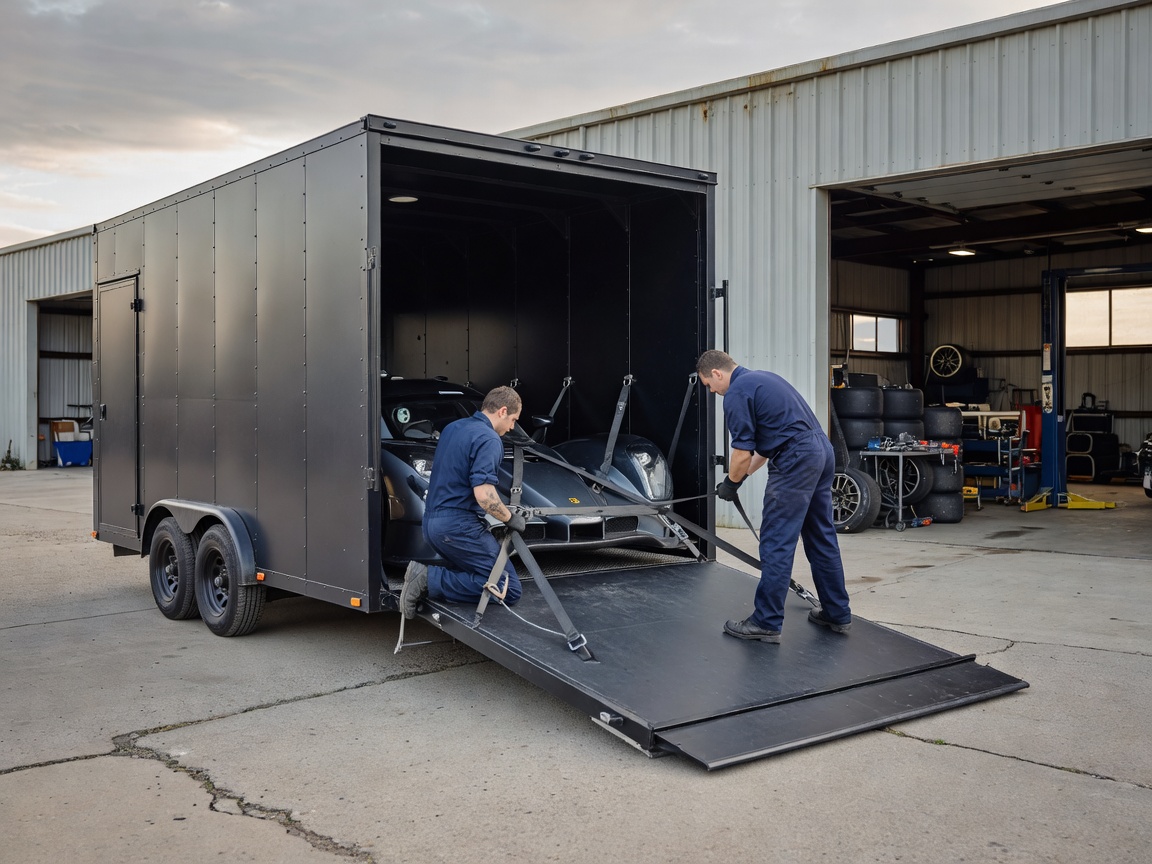
Why classic rally cars need dedicated transport planning
It is tempting to think you can simply drive your historic rally car to the event start, especially if it is road-legal. While that romantic notion worked fifty years ago, modern reality is less forgiving. Driving three hundred motorway miles on competition tyres, in heavy traffic with stiff engine mounts and loud straight-cut gearboxes, exhausts the crew before the first timed section even begins.
More critically, motorway travel subjects thin aluminium coachwork, bespoke perspex windows, and fragile period oil coolers to highway stone chips and salt spray. Transporting the vehicle enclosed ensures that it arrives in clean, verified condition, with full fuel tanks and a well-rested crew ready to compete.
Enclosed versus open trailers: The practical trade-offs
Enclosed Transportation
Total shielding from adverse weather, stone chips, and prying eyes. Secure storage in hotel car parks overnight, and protection for spare wheels and toolboxes carried within the transporter. The trade-off is higher trailer weight and the requirement for wider loading berths during arrival.
Open Transport Rigs
Lighter to tow and simpler to maneuver in tight village service parks. However, the vehicle is exposed to exhaust grime, stone impingement, and sudden weather changes. Delicate carburetors can ingest moisture during transit, resulting in hard starting on arrival.
Low-clearance loading protocols & securing systems
Rally cars frequently run low front splitters, protective sump guards, and large exhaust collectors. Driving up steep, generic trailer ramps will easily crack composite air dams or rip exhaust flanges off cylinder heads.
We utilize long extension ramps, hydraulic tilt-bed trailers, and adjustable winch systems to keep loading angles well under four degrees. Once inside, vehicles are secured exclusively by soft over-wheel strap webbing around the tyres. We never anchor ratchet straps directly to suspension wishbones, steering arms, or anti-roll bars; cinching down against suspension components bends geometry and damages damper seals during transit vibrations.
Cross-border European considerations and carnet compliance
Moving competition cars and specialist equipment between the UK, the European Union, and third nations (like Switzerland) requires precise administrative rigor. A simple clerical error on an ATA Carnet or customs declaration can leave a transporter impounded at a ferry port or border control post while the rally gets underway without you.
- Chassis & Engine Numbers: Every stamped numeral on the car must match the registration document, competition carnet, and FIA/FIVA passport exactly. Border officers frequently inspect bulkhead stamps.
- Spares Manifest: Transporters carrying spare gearboxes, wheels, fuel jugs, and diagnostic tools must carry an itemized equipment manifest listing serial numbers and replacement values.
- Contingency Timing: Customs queues and ferry delays happen. We always plan transport itineraries with generous margins, ensuring that unforeseen port delays do not compromise technical verification deadlines.
Collection, delivery coordination, and hand-off logs
Every movement of a client car begins and ends with a standardized condition report. Before keys are accepted, we document body panel gaps, glass condition, fluid levels, and battery isolation states with high-resolution photography and written sign-offs.
Upon delivery at the rally service area, the transporter driver conducts a handover inspection alongside the entrant or team manager. Keys, documentation binders, spare wheel racks, and supplementary fluids are inventoried together. Clear communication between workshop transport personnel and event organizers ensures that everyone knows where the car will unload and where support vehicles can legally park within the service paddock.