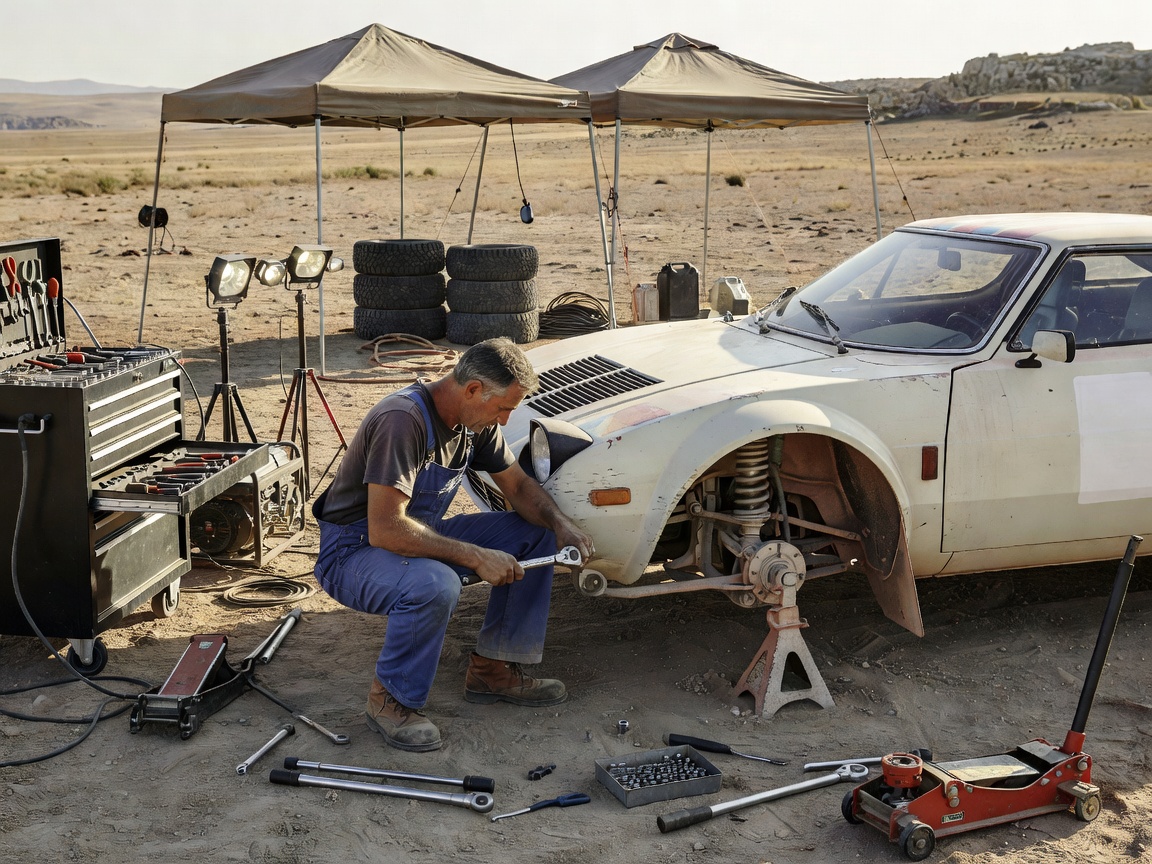
The paddock environment: Calm methods win endurance trials
Rally service halts are often noisy, muddy, and constrained by tight time windows. If your support crew spends the first ten minutes looking for a 13mm flare-nut spanner or a spare throttle return spring, you are already falling behind schedule.
Our event support model emphasizes rigorous paddock structure. When the vehicle arrives at the service park, ground mats are down, low-profile quick jacks are positioned, and each technician has an assigned inspection quadrant. The driver and navigator receive hydration and routebook updates without having to step over tools or discuss mechanical anxieties in a crowded tent.
The essential spares kit: Packing for genuine failure modes
You cannot carry an entire donor vehicle in a service van. Carrying three different spare cylinder heads into a remote alpine service park is wasteful; what you really need are the consumables and fragile ancillaries that frequently fail under rally stress:
- Ignition Components: Pre-gapped spark plugs, spare distributor cap, rotor arm, condensor/module, and an assembled ignition coil ready with wiring leads.
- Hydraulics & Belts: Pre-formed radiator hoses, matching fan/alternator belts, spare brake lines, and bleeder bottles with fresh fluid.
- Hardware & Fasteners: Period-correct metric or imperial fasteners, high-tensile hub studs, exhaust clamps, safety wire, and self-fusing silicone tape.
- Emergency Fluids: Two litres of correct high-ZDDP motor oil, transmission oil, distilled coolant, and brake fluid in dedicated leakproof containers.
Between-session check routines
When the rally car rolls into service between stages, the clock is ticking. Our support protocol follows a disciplined 15-minute sequence:
Post-event technical inspection and return logistics
Reaching the final ceremonial arch is a tremendous milestone, but our responsibility doesn’t conclude when the trophies are awarded. After the champagne spray, historic cars must be dried, secured, and evaluated before long return journeys.
We perform a systematic post-event inspection while the machinery is still assembled. We log every mechanical nuance discovered during the weekend: which cylinder showed slightly lower cold leakdown, whether the third-gear synchro felt sluggish, or if an exhaust hanger is showing fatigue. Documenting these real-world findings while they are fresh ensures that the car goes back to our workshop with a clear, honest work scope for the upcoming winter rebuild.
The human element: Navigator comfort and crew alignment
Historic rallying is a partnership between driver, co-driver, and support crew. A technical problem solved calmly preserves crew morale. When the support crew operates methodically, the crew in the car stays relaxed, their pace notes remain sharp, and their decisions on stage stay calculated rather than desperate. That cohesion is what brings vintage machinery home across the finish line year after year.